Google Play's 12 Testers, 14 Days Rule: What It Actually Requires
By Luis Krin, Founder, IndieAppCircle
Updated
Rules checked against Google's help page on Sep 28, 2026
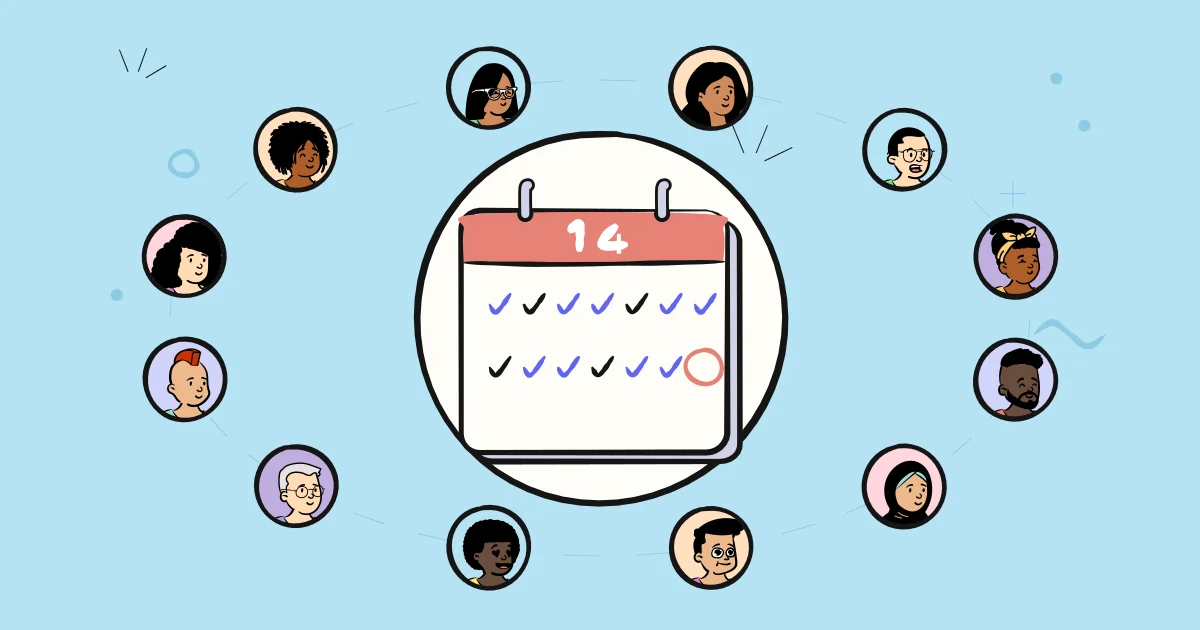
If you created a personal Google Play Console account recently, you cannot publish to production straight away. Google requires you to run a closed test first: at least 12 testers, opted in continuously for at least 14 days, before you can apply for production access.
The rule sounds simple. In practice it is the single biggest thing standing between a finished Android app and the Play Store, and a lot of solo developers lose weeks to it because the requirement is stricter than it first reads. This guide covers who it applies to, what the wording actually means, and where the 14 days most often go wrong.
Who the rule applies to
The requirement applies to personal Google Play Console accounts created after 13 November 2023. If your account predates that, or if it is an organisation account rather than a personal one, you are exempt and can publish to production directly.
This catches people out because most guides and tutorials on the internet were written before the policy existed. If you are following a walkthrough that goes straight from signing up to publishing, it was almost certainly written for an account type that does not have this gate.
What “12 testers for 14 continuous days” actually means
Three separate conditions are hiding in that sentence, and you have to satisfy all of them at the same time:
- At least 12 testers. This was 20 until Google reduced it in December 2024. It is a minimum, not a target, and there is no advantage to running exactly 12.
- Opted in, not just invited. Sending 30 invitations means nothing. The count is people who accepted and joined the test.
- Continuously, for 14 days. The 14 days have to be consecutive for each tester. This is the condition that breaks most closed tests.
The part that catches almost everyone: continuous opt-in
Google is explicit that testers who opt in, test for fewer than 14 days, and then opt out do not count toward the requirement. If somebody opts out and opts back in later, the clock restarts: the 14 days have to be consecutive.
This matters more than it sounds, because the natural behaviour of a helpful tester is to install your app, try it, leave you a note, and then uninstall it to free up space. That person did exactly what you asked and still does not count. If you recruit twelve people and four of them tidy up their phone in week two, you are back below the minimum and the timer effectively resets on the shortfall.
The practical consequence is that you need to tell testers, explicitly and up front, that the single most useful thing they can do is leave the app installed and stay opted in for two full weeks. Most people will happily do this if you ask. Almost nobody will guess it.
The count is only half of the requirement
Hitting 12 testers for 14 days makes you eligible to apply. It does not automatically get you approved. When you apply for production access, Google asks you questions about how the test went, including whether your testers used all of the available app features and whether their usage matched the behaviour you would expect from real production users.
In other words, Google is looking at whether you ran a real beta or whether you ran a timer. Twelve accounts that installed the app, opened it once and never came back technically satisfies the numbers while failing the intent, and you have to describe that test honestly in your own words on the application form.
Google does not publish a specific engagement threshold, so be sceptical of any guide that quotes you exact daily-active-user numbers as if they were policy. What is documented is the shape of what they want: testers who genuinely used the app across its features, in a way that looks like real usage.
💡 Tip: Keep notes during the 14 days. What testers reported, what you changed because of it, which features they actually reached. You will need to describe your closed test on the application form, and specifics are much easier to write if you wrote them down as they happened.
Where to actually find 12 real testers
This is the honest problem. Most solo developers do not know 12 people who own an Android device, want to try an unfinished app, and will keep it installed for two weeks. The usual suggestions each have a catch:
- Friends and family. Willing, but often on iPhones, and their feedback is usually too polite to be useful.
- Reddit and Discord. Real reach, but most communities are tired of closed-testing requests, and several subreddits ban them outright. Response rates are low and drop-off is high.
- Paid tester groups. Fast and expensive, and carries real risk. We cover why in buying Google Play testers vs getting real ones.
- Other indie developers. The most reliable group, because they own Android devices, they understand what a closed test is, and many of them need testers too.
That last option is why reciprocal testing works well here. Other developers do not need the requirement explained to them, they are not surprised by a rough build, and the exchange is symmetrical: you test their app, they test yours.
Running your closed test with IndieAppCircle testers
This is the reciprocal route, on the site you are reading. There is no special closed-testing mode: the normal listing already has everything a closed test needs.
- Test a couple of Android apps first. Your listing goes live once you have submitted two tests, and each approved test earns you credits to reward your own testers. New accounts start with 5.
- List the app with your opt-in link. Use the Play closed-testing opt-in URL, or your Google Group join link, as the app link and tag it Android.
- Ask for the two weeks in the instructions. Say that staying opted in for 14 continuous days is the most useful thing a tester can do, name the flows you want reached, and set a higher reward than a one-off test to match the longer commitment.
- Keep the reports. Every tester writes up what they did and what broke. That is the material the production access form asks you to describe.
How to run the 14 days so they count
A closed test that passes on the first attempt usually has these things in place before day one:
- More than 12 testers. Recruit 15 to 18. Assume some attrition and you will not have to restart.
- A clear ask about staying opted in. Say the two-week window out loud, in the invitation, in plain language.
- Specific test instructions. Name the flows you want people to reach. Testers who are told what to try will explore more of the app than testers who are told to have a look around.
- Something to come back for. Ship an update mid-test. It gives testers a reason to reopen the app and gives you something concrete to describe on the application.
- A way to collect feedback. Even a single form. You will want to reference what testers said when you apply.
A realistic timeline
Budget more than 14 days. Recruiting testers takes a few days, the 14-day clock only starts once you have your twelfth continuous opted-in tester, and Google says the production access review usually takes seven days or less but can occasionally take longer. Three to four weeks from a finished build to production is a normal outcome, and planning for that is much less painful than discovering it.
Final thoughts
The 12 testers rule is not really a testing requirement. It is a filter, designed to make it costly to publish low-effort apps from disposable accounts. The developers who get through it quickly are the ones who treat it as an actual beta: enough testers to absorb drop-off, clear instructions, a real reason to keep the app installed, and notes on what came out of it.
If you need Android testers who already understand closed testing, you can find 12 testers for your Google Play closed test on IndieAppCircle. You earn credits by testing other people's apps, then spend them to get real testers on your own, and you can browse the Android apps currently looking for testers to start earning straight away. If you have not used the site before, the quickest way in is to become a beta tester yourself first. And once the 14 days are over, the same testers can tell you a lot more than the count does: here is how to get useful feedback on your Android app.